Defy

Ordinary


Designed by One. Worn by the Discerning Few.

For Bogneri, design isn’t a styling exercise—it’s a philosophical stance. It’s the belief that a watch is not just a tool, or even a timekeeper, but a wearable expression of thought, taste, and imagination. And in a world where time moves faster than ever, perhaps that kind of permanence—the kind born from ideas rather than trends—is the ultimate luxury.


Architecture for the Wrist.

Emotion for the Soul.

Architecture as Art: The Sacred Geometry of Contextual Design

At Bogneri, we believe design should transcend function to become meaning. Like architecture at its most profound, our watches are more than instruments of time—they are vessels of presence, purpose, and place. 

Architecture as Art: The Sacred Geometry of Contextual Design

Architecture, at its most profound, transcends utility. It sheds the constraints of function and becomes a vessel for meaning. It is in this transcendence—when structure aligns with spirit, and geometry with gesture—that architecture evolves from the merely physical into the artistic. Like the masterstroke of a painter or the dissonant resolution in a symphony, architecture becomes art when it tells a story not just of space, but of presence, purpose, and place.

This alchemy does not occur through ornamentation or aesthetic excess. Rather, it arises from a thoughtful confluence of conceptual clarity, contextual response, symbolic resonance, and formal expression.


At its core, Architecture becomes Art when it speaks—when the shapes and voids, the light and shadows, the materials and masses, evoke more than admiration: they evoke reflection, memory, and imagination.


The transformation of architecture into art begins with an idea—a conceptual seed rooted in narrative, philosophy, or provocation. It is this idea, refined through iterative design and critical thinking, that elevates a project beyond the pragmatic. A building ceases to be a container and becomes a communicator. It begins to speak not only of what it houses, but of what it believes.

Openness defines enclosure, contrast defines boundaries, repetition defines time.

Time frames moments, and moments narrate a story.   

Contextualism: Architecture in Conversation

To be artful, architecture must listen. It must engage in a conversation with its context—topography, history, culture, climate, and community. A building that ignores its surroundings is a monologue; one that responds is a dialogue. In this conversation lies the power of architecture to root itself in place and amplify the voice of the landscape. 

Bogneri brings architectural contextualization in the watch industry to have an open dialogue with heritage, tradition, ergonomics;  bows to the past with reverence and respect, through the assembly of something different. that listens while it justactposes with delicate balance carried by a meaningful message. 

This is where watchmaking transcends engineering and becomes contextually performative. Bogneri does not compete with ttraditional horology; it collaborates with it. In doing so, it becomes not a mark in the industry, but an extension of it.

Contextualism: Architecture in Conversation

To be artful, architecture must listen. It must engage in a conversation with its context—topography, history, culture, climate, and community.

Your wrist deserves more than a Status Symbol.

It deserves a Masterpiece.

A painting inspired by the same concept that draws the shapes of the B-03 watch. 

Timepieces as Artifacts

Ultimately, the watch created through Architectural thinking is not just a product. It is an artifact—an expression of cultural and personal identity.

It is sculpture, system, and symbol all at once.

Like a great building, it has a public face and a private soul. It invites inspection and introspection. And like architecture, it is meant to last—not just in durability, but in relevance.

When architecture informs the design of a luxury wristwatch, something rare occurs. The watch transcends style and enters the realm of significance. It is no longer just worn—it is inhabited.

This is design as dialogue, timekeeping as storytelling, horology as philosophy. A watch, like a well-conceived building, becomes a mirror of its maker and a vessel for its wearer. It teaches us not only how to see time, but how to feel it.


Timepieces as Artifacts

Ultimately, the watch created through Architectural thinking is not just a product. It is an artifact—an expression of cultural and personal identity.

It is sculpture, system, and symbol all at once.

Bent hands symbolize the fluidity, subjectivity, and relativity of time. They challenge the conventional, rigid understanding of time as a fixed, linear measure, suggesting instead that it is a malleable, human-perceived experience.

The Story in the Shape

Ultimately, what elevates a design from mere structure to artistic statement is its ability to tell a story through shape and space. Architecture can embody movement. and movement in space define actions, emotions, thoughts and memories. 

The Story in the Shape

Ultimately, what elevates a design from mere structure to artistic statement is its ability to tell a story through shape and space. Architecture can embody movement. and movement in space define actions, emotions, thoughts and memories. These are spatial stories that unfold not on paper but in motion, as people traverse them, dwell within them, and make them their own.

In this way, architecture shares much with sculpture. It operates in three dimensions but exists for more than visual consumption. 

The best architecture choreographs feeling. When done well, this choreography becomes unforgettable.

When Architecture principles, design process and the sensitivity of a designer met watchmaking, Bogneri was born. 

Bogneri watches immersive experience embody the principles of Architecture at its highest. Refereces to geomeric shapes and forms come togetgher with visual experiences that merge the visible with the invisible, to ultimately connect a timepiece to our soul with an unique intimate connection.

This is Art on a wrist.  

A process sketch of the B-03

by the hand of its creator

We’re not competing with tradition,

we’re building our own.


One of the many reiterations of the silhouette of the B-03

The Art of Discovery

Art, in its truest form, is never a fixed statement—it is an open dialogue between the creator and the observer. While the artist infuses a piece with intention, symbolism, and emotion, the moment it is shared with the world, it begins to take on a life of its own. The meaning is no longer bound solely to the artist’s perspective; it becomes fluid, shaped by the eyes, memories, and inner landscapes of those who encounter it.

The discovery of meaning in an artifact is, therefore, deeply personal. What might have been born from one narrative can unfold into countless others, each equally valid and profound. A line, a form, a texture—small details that carried one significance for the artist—may awaken entirely different emotions in the viewer, who stitches them into the fabric of their own experiences. In this way, art becomes a mirror, reflecting not only what was placed into it, but also what we carry within ourselves.

This introspective journey transforms art into a living conversation. The viewer is not a passive recipient but an active participant, assembling fragments of symbolism and emotion into a message that resonates uniquely with their own context. And yet, even when the interpretation shifts, it never feels misplaced. Instead, it expands the artifact’s relevance, proving that true art has the rare ability to transcend time, culture, and circumstance—continually renewing itself through the people who engage with it.

The Art of Discovery

Art, in its truest form, is never a fixed statement—it is an open dialogue between the creator and the observer. While the artist infuses a piece with intention, symbolism, and emotion, the moment it is shared with the world, it begins to take on a life of its own.

Conclusion: Art that Holds Us

Architecture, at its best, is not a backdrop for life—it is a protagonist. It shapes our behaviors, rituals, and emotions. When elevated by thoughtful design, it becomes a mirror and a muse—an art form that holds us, shelters us, and reminds us of our place in the world.

To create architecture that is art is to commit to a deeper standard of intentionality. It is to believe that buildings can do more than serve—they can inspire, provoke, comfort, and connect. They can whisper the truths we forget and hold space for the dreams we haven’t yet named.


Bogneri is the calling of an architect-artist: to give shape to the invisible, and in doing so, offer the world not just a watch, but a soul.


Wear your imagination!


Defy Ordinary

Designed by One. Worn by the Discerning Few.

For Bogneri, design isn’t a styling exercise—it’s a philosophical stance. It’s the belief that a watch is not just a tool, or even a timekeeper, but a wearable expression of thought, taste, and imagination. And in a world where time moves faster than ever, perhaps that kind of permanence—the kind born from ideas rather than trends—is the ultimate luxury.


Architecture for the Wrist.

Emotion for the Soul.

Architecture as Art: The Sacred Geometry of Contextual Design

At Bogneri, we believe design should transcend function to become meaning. Like architecture at its most profound, our watches are more than instruments of time—they are vessels of presence, purpose, and place. 

Architecture as Art: The Sacred Geometry of Contextual Design

Architecture, at its most profound, transcends utility. It sheds the constraints of function and becomes a vessel for meaning. It is in this transcendence—when structure aligns with spirit, and geometry with gesture—that architecture evolves from the merely physical into the artistic. Like the masterstroke of a painter or the dissonant resolution in a symphony, architecture becomes art when it tells a story not just of space, but of presence, purpose, and place.

This alchemy does not occur through ornamentation or aesthetic excess. Rather, it arises from a thoughtful confluence of conceptual clarity, contextual response, symbolic resonance, and formal expression.


At its core, Architecture becomes Art when it speaks—when the shapes and voids, the light and shadows, the materials and masses, evoke more than admiration: they evoke reflection, memory, and imagination.


The transformation of architecture into art begins with an idea—a conceptual seed rooted in narrative, philosophy, or provocation. It is this idea, refined through iterative design and critical thinking, that elevates a project beyond the pragmatic. A building ceases to be a container and becomes a communicator. It begins to speak not only of what it houses, but of what it believes.

Openness defines enclosure, contrast defines boundaries, repetition defines time.

Time frames moments, and moments narrate a story.   

Contextualism: Architecture in Conversation

To be artful, architecture must listen. It must engage in a conversation with its context—topography, history, culture, climate, and community. A building that ignores its surroundings is a monologue; one that responds is a dialogue. In this conversation lies the power of architecture to root itself in place and amplify the voice of the landscape. 

Bogneri brings architectural contextualization in the watch industry to have an open dialogue with heritage, tradition, ergonomics;  bows to the past with reverence and respect, through the assembly of something different. that listens while it justactposes with delicate balance carried by a meaningful message. 

This is where watchmaking transcends engineering and becomes contextually performative. Bogneri does not compete with ttraditional horology; it collaborates with it. In doing so, it becomes not a mark in the industry, but an extension of it.

Contextualism: Architecture in Conversation

To be artful, architecture must listen. It must engage in a conversation with its context—topography, history, culture, climate, and community.

Your wrist deserves more than a status symbol.

It deserves a masterpiece.

A painting inspired by the same concept that draws the shapes of the B-03 watch. 

Timepieces as Artifacts

Ultimately, the watch created through Architectural thinking is not just a product. It is an artifact—an expression of cultural and personal identity.

It is sculpture, system, and symbol all at once.

Like a great building, it has a public face and a private soul. It invites inspection and introspection. And like architecture, it is meant to last—not just in durability, but in relevance.

When architecture informs the design of a luxury wristwatch, something rare occurs. The watch transcends style and enters the realm of significance. It is no longer just worn—it is inhabited.

This is design as dialogue, timekeeping as storytelling, horology as philosophy. A watch, like a well-conceived building, becomes a mirror of its maker and a vessel for its wearer. It teaches us not only how to see time, but how to feel it.


Timepieces as Artifacts

Ultimately, the watch created through Architectural thinking is not just a product. It is an artifact—an expression of cultural and personal identity.

It is sculpture, system, and symbol all at once.

Bent hands symbolize the fluidity, subjectivity, and relativity of time. They challenge the conventional, rigid understanding of time as a fixed, linear measure, suggesting instead that it is a malleable, human-perceived experience.

The Story in the Shape

Ultimately, what elevates a design from mere structure to artistic statement is its ability to tell a story through shape and space. Architecture can embody movement. and movement in space define actions, emotions, thoughts and memories. 

The Story in the Shape

Ultimately, what elevates a design from mere structure to artistic statement is its ability to tell a story through shape and space. Architecture can embody movement. and movement in space define actions, emotions, thoughts and memories. These are spatial stories that unfold not on paper but in motion, as people traverse them, dwell within them, and make them their own.

In this way, architecture shares much with sculpture. It operates in three dimensions but exists for more than visual consumption. 

The best architecture choreographs feeling. When done well, this choreography becomes unforgettable.

When Architecture principles, design process and the sensitivity of a designer met watchmaking, Bogneri was born. 

Bogneri watches immersive experience embody the principles of Architecture at its highest. Refereces to geomeric shapes and forms come togetgher with visual experiences that merge the visible with the invisible, to ultimately connect a timepiece to our soul with an unique intimate connection.

This is Art on a wrist.  

A process sketch of the B-03 by the hand of its creator

We’re not competing with tradition,

we’re building our own


One of the many reiterations of the silhouette of the B-03

The Art of Discovery

Art, in its truest form, is never a fixed statement—it is an open dialogue between the creator and the observer. While the artist infuses a piece with intention, symbolism, and emotion, the moment it is shared with the world, it begins to take on a life of its own. The meaning is no longer bound solely to the artist’s perspective; it becomes fluid, shaped by the eyes, memories, and inner landscapes of those who encounter it.

The discovery of meaning in an artifact is, therefore, deeply personal. What might have been born from one narrative can unfold into countless others, each equally valid and profound. A line, a form, a texture—small details that carried one significance for the artist—may awaken entirely different emotions in the viewer, who stitches them into the fabric of their own experiences. In this way, art becomes a mirror, reflecting not only what was placed into it, but also what we carry within ourselves.

This introspective journey transforms art into a living conversation. The viewer is not a passive recipient but an active participant, assembling fragments of symbolism and emotion into a message that resonates uniquely with their own context. And yet, even when the interpretation shifts, it never feels misplaced. Instead, it expands the artifact’s relevance, proving that true art has the rare ability to transcend time, culture, and circumstance—continually renewing itself through the people who engage with it.

The Art of Discovery

Art, in its truest form, is never a fixed statement—it is an open dialogue between the creator and the observer. While the artist infuses a piece with intention, symbolism, and emotion, the moment it is shared with the world, it begins to take on a life of its own.

Conclusion: Art that Holds Us

Architecture, at its best, is not a backdrop for life—it is a protagonist. It shapes our behaviors, rituals, and emotions. When elevated by thoughtful design, it becomes a mirror and a muse—an art form that holds us, shelters us, and reminds us of our place in the world.

To create architecture that is art is to commit to a deeper standard of intentionality. It is to believe that buildings can do more than serve—they can inspire, provoke, comfort, and connect. They can whisper the truths we forget and hold space for the dreams we haven’t yet named.


Bogneri is the calling of an architect-artist: to give shape to the invisible, and in doing so, offer the world not just a watch, but a soul.


Wear your imagination!


Defy Ordinary

Welcome to Bogneri, luxury timepieces conceived for those who are driven to uniqueness rather than ordinary conformist fashion, with discriminating taste and a discerning eye for beauty.

Bogneri delivers unapologetic Italian style, keen for tridimensional experiences, combined with the highest quality of Swiss, German, and Japanese watchmaking artisanship.


Designed by One. Worn by the Discerning Few.

For Bogneri, design isn’t a styling exercise—it’s a philosophical stance. It’s the belief that a watch is not just a tool, or even a timekeeper, but a wearable expression of thought, taste, and imagination. And in a world where time moves faster than ever, perhaps that kind of permanence—the kind born from ideas rather than trends—is the ultimate luxury.


Architecture for the Wrist.

Emotion for the Soul.

Architecture as Art: The Sacred Geometry of Contextual Design

At Bogneri, we believe design should transcend function to become meaning. Like architecture at its most profound, our watches are more than instruments of time—they are vessels of presence, purpose, and place. 

Architecture as Art: The Sacred Geometry of Contextual Design

Architecture, at its most profound, transcends utility. It sheds the constraints of function and becomes a vessel for meaning. It is in this transcendence—when structure aligns with spirit, and geometry with gesture—that architecture evolves from the merely physical into the artistic. Like the masterstroke of a painter or the dissonant resolution in a symphony, architecture becomes art when it tells a story not just of space, but of presence, purpose, and place.

This alchemy does not occur through ornamentation or aesthetic excess. Rather, it arises from a thoughtful confluence of conceptual clarity, contextual response, symbolic resonance, and formal expression.


At its core, Architecture becomes Art when it speaks—when the shapes and voids, the light and shadows, the materials and masses, evoke more than admiration: they evoke reflection, memory, and imagination.


The transformation of architecture into art begins with an idea—a conceptual seed rooted in narrative, philosophy, or provocation. It is this idea, refined through iterative design and critical thinking, that elevates a project beyond the pragmatic. A building ceases to be a container and becomes a communicator. It begins to speak not only of what it houses, but of what it believes.

Openness defines enclosure, contrast defines boundaries, repetition defines time.

Time frames moments, and moments narrate a story.   

Contextualism: Architecture in Conversation

To be artful, architecture must listen. It must engage in a conversation with its context—topography, history, culture, climate, and community. A building that ignores its surroundings is a monologue; one that responds is a dialogue. In this conversation lies the power of architecture to root itself in place and amplify the voice of the landscape. 

Bogneri brings architectural contextualization in the watch industry to have an open dialogue with heritage, tradition, ergonomics;  bows to the past with reverence and respect, through the assembly of something different. that listens while it justactposes with delicate balance carried by a meaningful message. 

This is where watchmaking transcends engineering and becomes contextually performative. Bogneri does not compete with ttraditional horology; it collaborates with it. In doing so, it becomes not a mark in the industry, but an extension of it.

Contextualism: Architecture in Conversation

To be artful, architecture must listen. It must engage in a conversation with its context—topography, history, culture, climate, and community.

Your wrist deserves more than a status symbol.

It deserves a masterpiece.

A painting inspired by the same concept that draws the shapes of the B-03 watch. 

Timepieces as Artifacts

Ultimately, the watch created through Architectural thinking is not just a product. It is an artifact—an expression of cultural and personal identity.

It is sculpture, system, and symbol all at once.

Like a great building, it has a public face and a private soul. It invites inspection and introspection. And like architecture, it is meant to last—not just in durability, but in relevance.

When architecture informs the design of a luxury wristwatch, something rare occurs. The watch transcends style and enters the realm of significance. It is no longer just worn—it is inhabited.

This is design as dialogue, timekeeping as storytelling, horology as philosophy. A watch, like a well-conceived building, becomes a mirror of its maker and a vessel for its wearer. It teaches us not only how to see time, but how to feel it.


Timepieces as Artifacts

Ultimately, the watch created through Architectural thinking is not just a product. It is an artifact—an expression of cultural and personal identity.

It is sculpture, system, and symbol all at once.

Bent hands symbolize the fluidity, subjectivity, and relativity of time. They challenge the conventional, rigid understanding of time as a fixed, linear measure, suggesting instead that it is a malleable, human-perceived experience.

The Story in the Shape

Ultimately, what elevates a design from mere structure to artistic statement is its ability to tell a story through shape and space. Architecture can embody movement. and movement in space define actions, emotions, thoughts and memories. 

The Story in the Shape

Ultimately, what elevates a design from mere structure to artistic statement is its ability to tell a story through shape and space. Architecture can embody movement. and movement in space define actions, emotions, thoughts and memories. These are spatial stories that unfold not on paper but in motion, as people traverse them, dwell within them, and make them their own.

In this way, architecture shares much with sculpture. It operates in three dimensions but exists for more than visual consumption. 

The best architecture choreographs feeling. When done well, this choreography becomes unforgettable.

When Architecture principles, design process and the sensitivity of a designer met watchmaking, Bogneri was born. 

Bogneri watches immersive experience embody the principles of Architecture at its highest. Refereces to geomeric shapes and forms come togetgher with visual experiences that merge the visible with the invisible, to ultimately connect a timepiece to our soul with an unique intimate connection.

This is Art on a wrist.  

A process sketch of the B-03 by the hand of its creator

We’re not competing with tradition,

we’re building our own


One of the many reiterations of the silhouette of the B-03

The Art of Discovery

Art, in its truest form, is never a fixed statement—it is an open dialogue between the creator and the observer. While the artist infuses a piece with intention, symbolism, and emotion, the moment it is shared with the world, it begins to take on a life of its own. The meaning is no longer bound solely to the artist’s perspective; it becomes fluid, shaped by the eyes, memories, and inner landscapes of those who encounter it.

The discovery of meaning in an artifact is, therefore, deeply personal. What might have been born from one narrative can unfold into countless others, each equally valid and profound. A line, a form, a texture—small details that carried one significance for the artist—may awaken entirely different emotions in the viewer, who stitches them into the fabric of their own experiences. In this way, art becomes a mirror, reflecting not only what was placed into it, but also what we carry within ourselves.

This introspective journey transforms art into a living conversation. The viewer is not a passive recipient but an active participant, assembling fragments of symbolism and emotion into a message that resonates uniquely with their own context. And yet, even when the interpretation shifts, it never feels misplaced. Instead, it expands the artifact’s relevance, proving that true art has the rare ability to transcend time, culture, and circumstance—continually renewing itself through the people who engage with it.

The Art of Discovery

Art, in its truest form, is never a fixed statement—it is an open dialogue between the creator and the observer. While the artist infuses a piece with intention, symbolism, and emotion, the moment it is shared with the world, it begins to take on a life of its own.

Conclusion: Art that Holds Us

Architecture, at its best, is not a backdrop for life—it is a protagonist. It shapes our behaviors, rituals, and emotions. When elevated by thoughtful design, it becomes a mirror and a muse—an art form that holds us, shelters us, and reminds us of our place in the world.

To create architecture that is art is to commit to a deeper standard of intentionality. It is to believe that buildings can do more than serve—they can inspire, provoke, comfort, and connect. They can whisper the truths we forget and hold space for the dreams we haven’t yet named.


Bogneri is the calling of an architect-artist: to give shape to the invisible, and in doing so, offer the world not just a watch, but a soul.


Wear your imagination!


Defy Ordinary

Welcome to Bogneri, luxury timepieces conceived for those who are driven to uniqueness rather than ordinary conformist fashion, with discriminating taste and a discerning eye for beauty.

Bogneri delivers unapologetic Italian style, keen for tridimensional experiences, combined with the highest quality of Swiss, German, and Japanese watchmaking artisanship.


Designed by One. Worn by the Discerning Few.

For Bogneri, design isn’t a styling exercise—it’s a philosophical stance. It’s the belief that a watch is not just a tool, or even a timekeeper, but a wearable expression of thought, taste, and imagination. And in a world where time moves faster than ever, perhaps that kind of permanence—the kind born from ideas rather than trends—is the ultimate luxury.


Designed by One. Worn by the Discerning Few.

For Bogneri, design isn’t a styling exercise—it’s a philosophical stance. It’s the belief that a watch is not just a tool, or even a timekeeper, but a wearable expression of thought, taste, and imagination. And in a world where time moves faster than ever, perhaps that kind of permanence—the kind born from ideas rather than trends—is the ultimate luxury.


Designed by One. Worn by the Discerning Few.

For Bogneri, design isn’t a styling exercise—it’s a philosophical stance. It’s the belief that a watch is not just a tool, or even a timekeeper, but a wearable expression of thought, taste, and imagination. And in a world where time moves faster than ever, perhaps that kind of permanence—the kind born from ideas rather than trends—is the ultimate luxury.


Architecture for the Wrist.

Emotion for the Soul.

Architecture as Art: The Sacred Geometry of Contextual Design

At Bogneri, we believe design should transcend function to become meaning. Like architecture at its most profound, our watches are more than instruments of time—they are vessels of presence, purpose, and place. 

Architecture as Art: The Sacred Geometry of Contextual Design

Architecture, at its most profound, transcends utility. It sheds the constraints of function and becomes a vessel for meaning. It is in this transcendence—when structure aligns with spirit, and geometry with gesture—that architecture evolves from the merely physical into the artistic. Like the masterstroke of a painter or the dissonant resolution in a symphony, architecture becomes art when it tells a story not just of space, but of presence, purpose, and place.

This alchemy does not occur through ornamentation or aesthetic excess. Rather, it arises from a thoughtful confluence of conceptual clarity, contextual response, symbolic resonance, and formal expression.

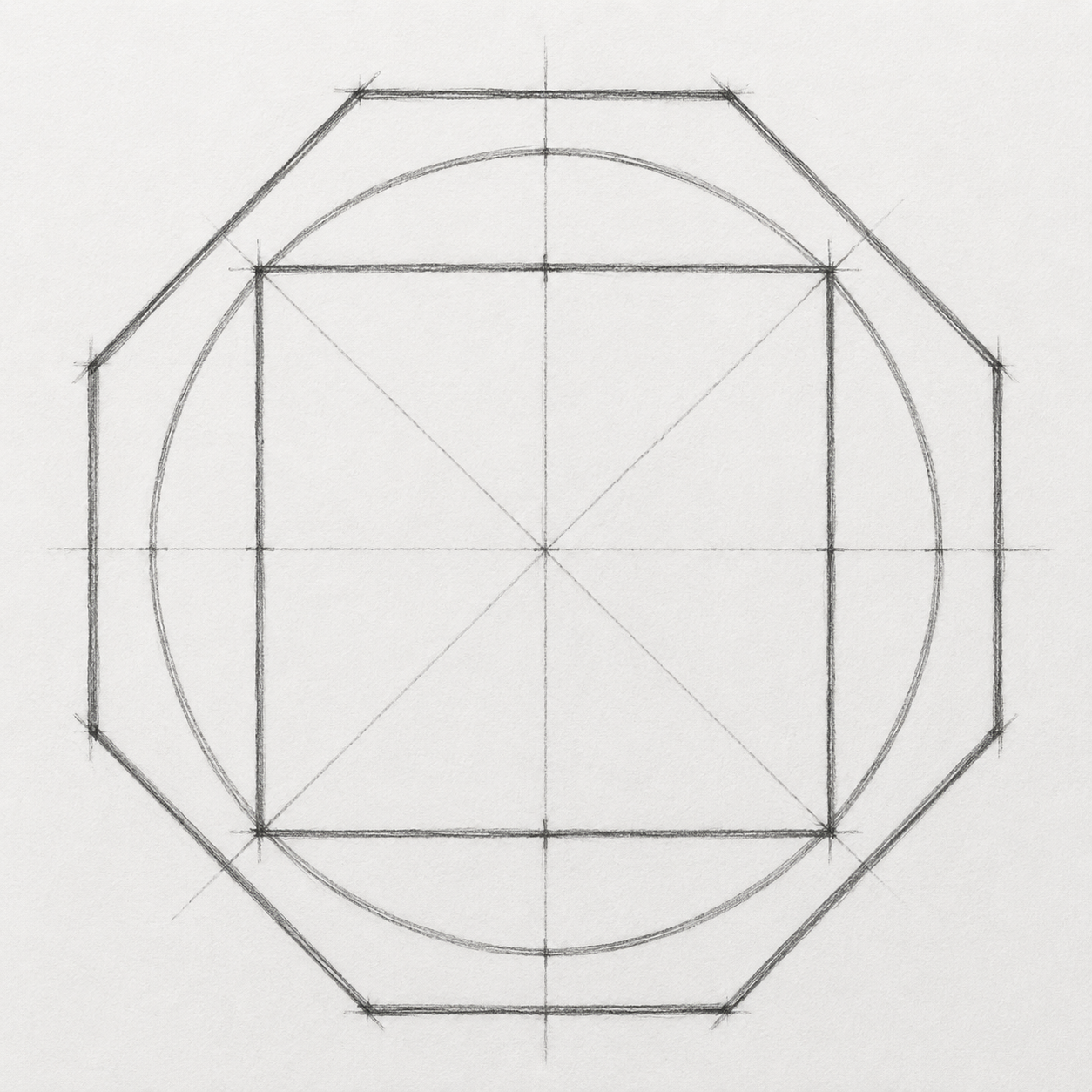
The Octagon,

The Square,

and the Circle;

Reunited.

At its core, Architecture becomes Art when it speaks—when the shapes and voids, the light and shadows, the materials and masses, evoke more than admiration: they evoke reflection, memory, and imagination.


The transformation of architecture into art begins with an idea—a conceptual seed rooted in narrative, philosophy, or provocation. It is this idea, refined through iterative design and critical thinking, that elevates a project beyond the pragmatic. A building ceases to be a container and becomes a communicator. It begins to speak not only of what it houses, but of what it believes.

Openness defines enclosure, contrast defines boundaries, repetition defines time. Time frames moments, and moments narrate a story.   

Contextualism: Architecture in Conversation

To be artful, architecture must listen. It must engage in a conversation with its context—topography, history, culture, climate, and community. A building that ignores its surroundings is a monologue; one that responds is a dialogue. In this conversation lies the power of architecture to root itself in place and amplify the voice of the landscape. 

Bogneri brings architectural contextualization in the watch industry to have an open dialogue with heritage, tradition, ergonomics;  bows to the past with reverence and respect, through the assembly of something different. that listens while it justactposes with delicate balance carried by a meaningful message. 

This is where watchmaking transcends engineering and becomes contextually performative. Bogneri does not compete with ttraditional horology; it collaborates with it. In doing so, it becomes not a mark in the industry, but an extension of it.

Contextualism: Architecture in Conversation

To be artful, architecture must listen. It must engage in a conversation with its context—topography, history, culture, climate, and community.

Your wrist deserves more than a status symbol.

It deserves a masterpiece.

Timepieces as Artifacts

Ultimately, the watch created through Architectural thinking is not just a product. It is an artifact—an expression of cultural and personal identity.

It is sculpture, system, and symbol all at once.

Like a great building, it has a public face and a private soul. It invites inspection and introspection. And like architecture, it is meant to last—not just in durability, but in relevance.

When architecture informs the design of a luxury wristwatch, something rare occurs. The watch transcends style and enters the realm of significance. It is no longer just worn—it is inhabited.

This is design as dialogue, timekeeping as storytelling, horology as philosophy. A watch, like a well-conceived building, becomes a mirror of its maker and a vessel for its wearer. It teaches us not only how to see time, but how to feel it.

Timepieces as Artifacts

Ultimately, the watch created through Architectural thinking is not just a product. It is an artifact—an expression of cultural and personal identity.

It is sculpture, system, and symbol all at once.

A painting inspired by the same concept that draws the shapes of the B-03 watch. 

A beautiful thing

that makes you think.

Bent hands symbolize the fluidity, subjectivity, and relativity of time. They challenge the conventional, rigid understanding of time as a fixed, linear measure, suggesting instead that it is a malleable, human-perceived experience.

Bent hands symbolize the fluidity, subjectivity, and relativity of time. They challenge the conventional, rigid understanding of time as a fixed, linear measure, suggesting instead that it is a malleable, human-perceived experience.

The Story in the Shape

Ultimately, what elevates a design from mere structure to artistic statement is its ability to tell a story through shape and space. Architecture can embody movement. and movement in space define actions, emotions, thoughts and memories. These are spatial stories that unfold not on paper but in motion, as people traverse them, dwell within them, and make them their own.

In this way, architecture shares much with sculpture. It operates in three dimensions but exists for more than visual consumption. 

The best architecture choreographs feeling. When done well, this choreography becomes unforgettable.

When Architecture principles, design process and the sensitivity of a designer met watchmaking, Bogneri was born. 

Bogneri watches immersive experience embody the principles of Architecture at its highest. Refereces to geomeric shapes and forms come togetgher with visual experiences that merge the visible with the invisible, to ultimately connect a timepiece to our soul with an unique intimate connection.

This is Art on a wrist.  

The Story in the Shape

Ultimately, what elevates a design from mere structure to artistic statement is its ability to tell a story through shape and space. Architecture can embody movement. and movement in space define actions, emotions, thoughts and memories. 

A process sketch of the B-03 by the hand of its creator

We’re not competing with tradition,

we’re building our own.


One of the many reiterations of the silhouette of the B-03

The Art of Discovery

Art, in its truest form, is never a fixed statement—it is an open dialogue between the creator and the observer. While the artist infuses a piece with intention, symbolism, and emotion, the moment it is shared with the world, it begins to take on a life of its own. The meaning is no longer bound solely to the artist’s perspective; it becomes fluid, shaped by the eyes, memories, and inner landscapes of those who encounter it.


The discovery of meaning in an artifact is, therefore, deeply personal. What might have been born from one narrative can unfold into countless others, each equally valid and profound. A line, a form, a texture—small details that carried one significance for the artist—may awaken entirely different emotions in the viewer, who stitches them into the fabric of their own experiences. In this way, art becomes a mirror, reflecting not only what was placed into it, but also what we carry within ourselves.


This introspective journey transforms art into a living conversation. The viewer is not a passive recipient but an active participant, assembling fragments of symbolism and emotion into a message that resonates uniquely with their own context. And yet, even when the interpretation shifts, it never feels misplaced. Instead, it expands the artifact’s relevance, proving that true art has the rare ability to transcend time, culture, and circumstance—continually renewing itself through the people who engage with it.

The Art of Discovery

Art, in its truest form, is never a fixed statement—it is an open dialogue between the creator and the observer. While the artist infuses a piece with intention, symbolism, and emotion, the moment it is shared with the world, it begins to take on a life of its own.

Conclusion: Art that Holds Us

Architecture, at its best, is not a backdrop for life—it is a protagonist. It shapes our behaviors, rituals, and emotions. When elevated by thoughtful design, it becomes a mirror and a muse—an art form that holds us, shelters us, and reminds us of our place in the world.

To create architecture that is art is to commit to a deeper standard of intentionality. It is to believe that buildings can do more than serve—they can inspire, provoke, comfort, and connect. They can whisper the truths we forget and hold space for the dreams we haven’t yet named.


Bogneri is the calling of an architect-artist: to give shape to the invisible, and in doing so, offer the world not just a watch, but a soul.


Wear your imagination!